Interpretation
The park offers a wide range of interpretive opportunities. Self-guided nature tails, a wildlife observation blind at the wetland and signs educate visitors that tour the park. Interpretive trails include the trails at the interpretive center, the Horseshoe Bluff Trail and the Wetland Trail system. A Junior Naturalist program is available for families and kids to explore and learn about the history and nature of the Mines of Spain. Information can be obtained at the E.B. Lyons Interpretive Center. There are no camping facilities available at the Mines of Spain.
Prairie and Wetlands
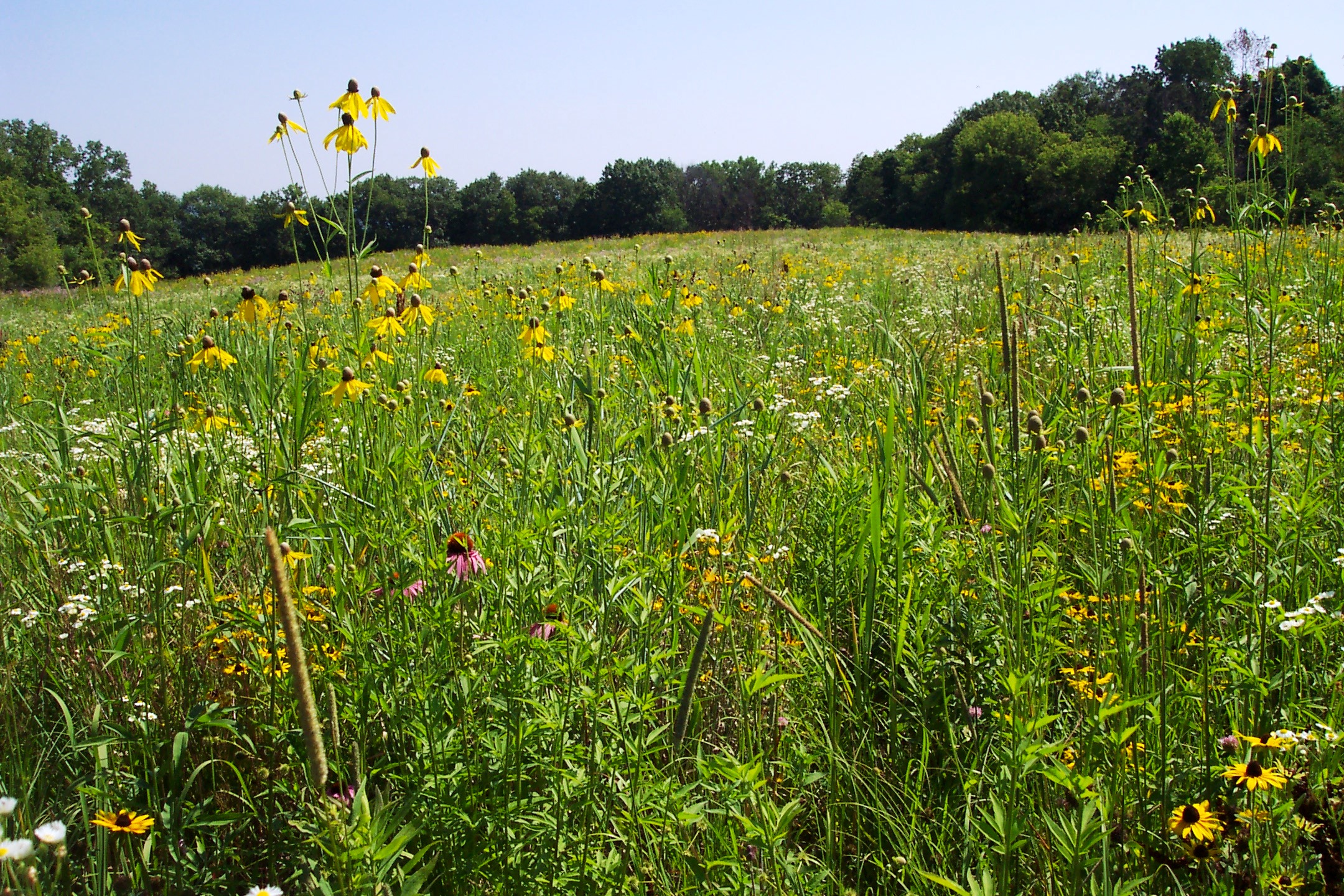
The Mines of Spain Area was designated as one of Iowa’s Watchable Wildlife Areas, and with good cause. Rare species, including the bobcat, red-shouldered hawk, flying squirrel, and bald eagle have all been on the area. In addition, the area is home to a large variety of songbirds, white-tailed deer, wild turkey, and numerous small mammals. With wetlands, creeks, forests, prairies, cropland,
meadows, and the Mississippi River, the Mines of Spain offers a wide variety of Iowa’s natural world for those who take the time to look and listen
Julien Dubuque Monument
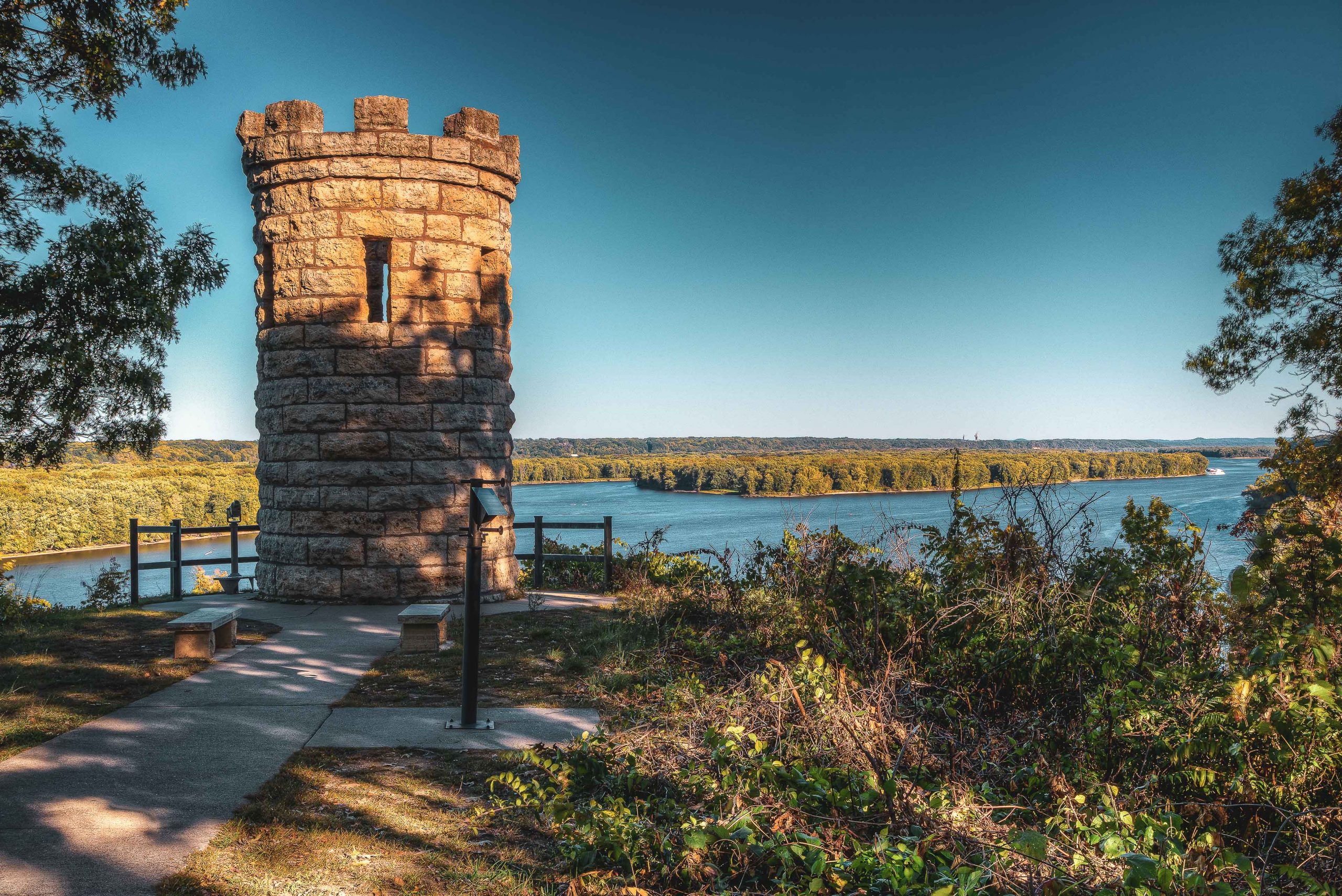
Julien Dubuque is credited as being the first European to settle on what is now Iowa soil in 1788. In 1796, Dubuque received a land grant from the Governor of Spain, who had resided in New Orleans at the time. The grant gave permission to Julien Dubuque to work the land which was owned by Spain and specified the 189-square mile area to be named as Mines of Spain. Dubuque eventually married Potosa, daughter of the Mesquakie Indian Chief, Peosta. Dubuque died March 24,1810.
The Julien Dubuque Monument, built in 1897, sits high above the Mississippi River and provides the Landmark for the Mines of Spain Area. Julien Dubuque is buried on this site, which provides a scenic vista of the 1432-acre Mines of Spain, the city of Dubuque, the Mississippi River Valley, and Illinois. When Dubuque died, the Mesquakie buried him with tribal honors beneath a log mausoleum at the site where the current monument now stands.
Horseshoe Bluff
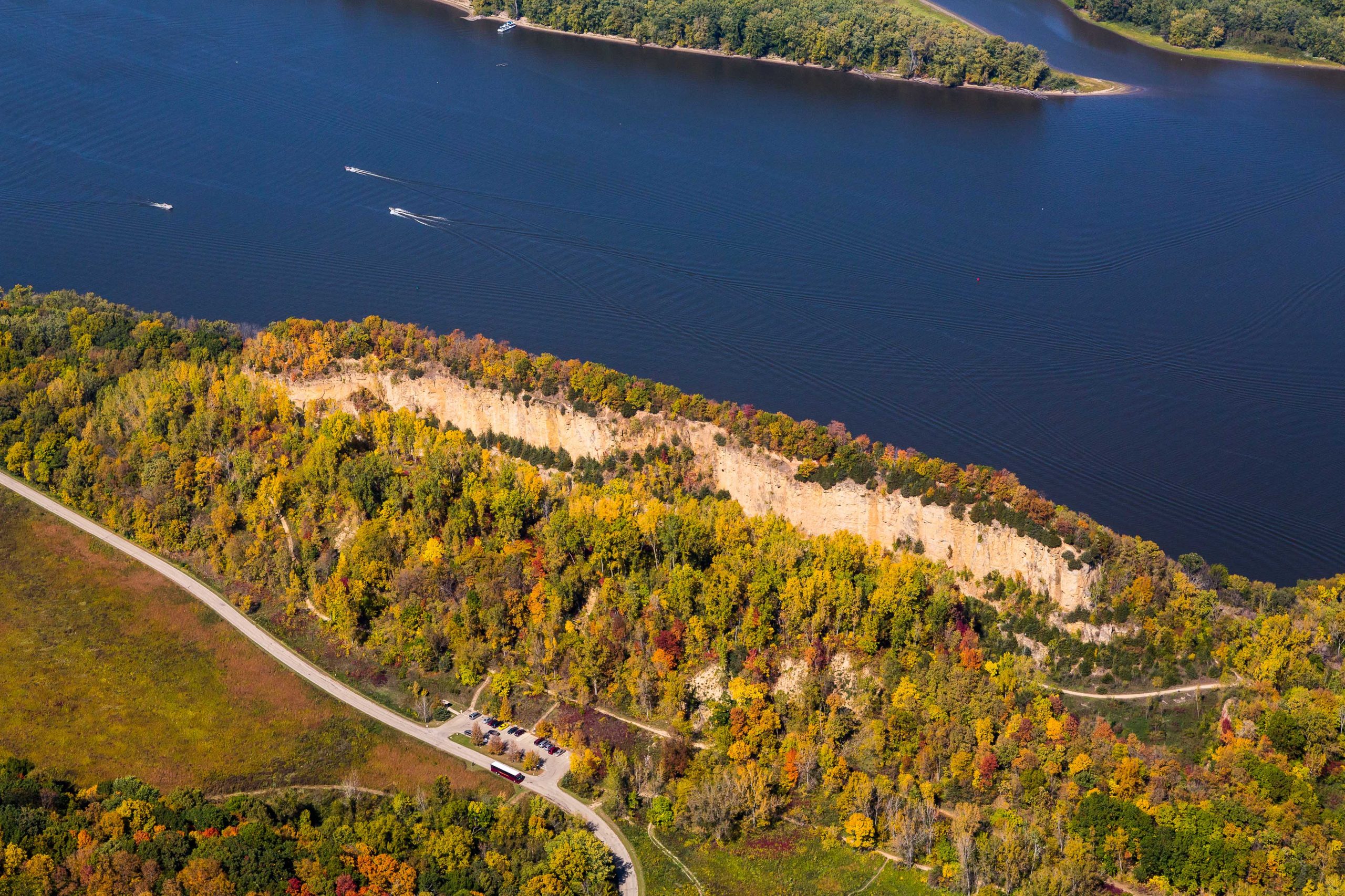
The geological history of the Dubuque vicinity is laid bare in this area. A thick layer of Ordovician dolomite rock has been exposed in the horseshoe-shaped quarry. In addition, a 15-acre wetland with two floating trails gives access to a wildlife observation blind. Interpretive signs provide interesting insights into the geology, history and resources of the Mines of Spain Area.
Vegetation at the Mines of Spain – PDF listing of vegitation here
Wildlife of the Mines of Spain – PDF listing of what can be found here
Bird Checklist – PDF of the birds you may see on your visit
Friends of The Mines of Spain, Dubuque, IA 52003-9214, 563-556-0620